SUB

A TOTALLY AMATEUR BANKNOTE COLLECTOR

Tuesday, 2 June 2015

SCOTLAND'S FIRST POLYMER NOTE


The note above is Scotland's (and the UK's) first polymer note. it has Sir William Arrol who's company built the forth (rail) bridge in 1890. the second road bridge is in the process of being built as we speak.

more info from clydesdale bank
see some of the security features here


FIRST IMPRESSIONS


Tuesday, 19 May 2015

TEST NOTES POST

See the useful  comment below. thought it might be better copied into a main post. Thanks to the anonymous poster.

It was from the Panama note page but may apply to Andorra and monaco too


ATM test notes fit the definition you wrote. A printer's test note is produced as a "house note" to show prospective and current clients and to distribute at currency forums to Central Banks and IBNS shows. One TDLR note was used to secure a U.S. patent on a method of determining bank note wear! I need to write an article in the IBNS journal about that some time. 
This Panama note I would call an essay or private printer note, produced for the collectors market. Others include Andorra, San Marino, Greenland, Antarctica, et.al.


NB: TDLR = Thomas de la rue (banknote maker)


        IBNS = International Bank Note Society


Many thanks to the poster.


FOUND THIS ON WIKIPEDIA

Variants of specimen notes, as well as other non-legal-tender images of banknotes include:
  • An essay banknote is a potential design of a new banknote. Very often an essay has no serial numbers.
  • A proof banknote is printed as a way of checking to see whether or not the design is suitable for putting into full production as a currency issue, as well as part of the process of testing various stages of the printing process of a banknote that has. Proof banknotes may be partial proofs of the obverse or reverse only ("uniface proofs"), or of only pieces of the design, such as the portrait. [2]
  • A plate proof banknote is a proof banknote of a multi-color banknote where there are separate plates used for printing separate colors.
  • A trial color proof is printed typically in a variety of different colors or shades, either for testing or as part of the testing process.
  • A test note generally has no identifiable denomination or has a fictitious currency and is used by independent printers or Government printers to showcase their printing technology or anti-counterfeiting measures, or as souvenirs at various industry tradeshows or collector events and expositions. Some test notes, generally much cruder, are issued by manufacturers of Automated Teller Machines, cash registers, banknote authenticating or counting machines for purposes of testing.[3]
  • A practice note is generally similar in size, shape and color to circulating banknotes and are used for training bank tellers, cashiers and staff at currency exchanges. They are generally unofficial and crudely printed, but are occasionally issued by central banks or printers when a new form of paper money is introduced (for example when the Euro notes replaced national currency in many European countries). Practice notes have also been created officially by the central banks when a new form of currency has been introduced, for example when Australia and New Zealand introduced decimal currency, replacing the Pound and pence with Dollars and cents.
  • Educational notes or School Currency was issued by some trade schools specifically to train students to be clerks or cashiers.
  • Play money may resemble real banknotes or be entirely fictitious and would typically be used by children for play, or as promotions or political or commercial advertising, often with additional messages overprinted or printed on one side.
  • Hell banknotes resemble real banknotes or are fictitious, but are burned or buried, typically within Asian communities.
  • Replica banknotes are copies, often easily identifiable, of historical or scarce banknotes. Sold as souvenirs at museums (e.g. Confederate currency) or as "space fillers" for collectors.
  • Stage currency or Movie money is printed to resemble current or historical banknotes, but used on stage in theatrical productions or movies.
  • Propaganda banknotes are issued by political factions, or enemies at war. They may be used for psychological warfare, or provide instructions about how to surrender (a "Safe Conduct Pass" has been dropped from aircraft over Vietnam, Iraq, Bosnia, etc. by US or NATO forces with a reproduction of a banknote on one side).
  • Counterfeit banknotes include "contemporary circulating counterfeits" circulating fraudulently, counterfeit money issued by foreign governments as part of a destabilization campaign (e.g. the Nazi Operation Bernhard, or British counterfeits of Ottoman currency), as well as counterfeits of scarce variants of banknotes issued to defraud collectors.

Thursday, 7 May 2015

ANDORRA NOTE


Another test note here, this time from Andorra.officially the Principality of Andorra , is a sovereign landlocked microstate in Southwestern Europe, located in the eastern Pyrenees mountains and bordered by Spain and France. It is the sixth-smallest nation in Europe, having an area of 468 km2 (181 sq mi) and a population of ca. 85,000. Its capital Andorra la Vella is the highest capital city in Europe, at an elevation of 1,023 metres (3,356 ft) above sea level. The official language is Catalan, although Spanish, Portuguese, and French are also commonly spoken.

 It is not a member of the European Union, but the euro is the de facto currency. It has been a member of the United Nations since 1993.

the note above is the 5 pessetes note with the marineda bridge on the reverse


Sunday, 29 March 2015

MONACO


Monaco, officially the Principality of Monaco, is a sovereign city-state and microstate, located on the French Riviera in Western Europe. It is bordered by France on three sides; one side borders the Mediterranean Sea. Monaco is the second smallest and the most densely populated country in the world.. Monaco's most populous Quarter is Monte Carlo and the most populous Ward is Larvotto/Bas Moulins. Through land reclamation, Monaco's land mass has expanded by twenty percent.

MONETARY UNITS

1 ( Monegasque) franc = 100 centimes (until 2002)

1 euro = 100 cents  ( from 2002 )


The note above is a private issue note from 2014 with (Princess ) Grace Kelly on the front and the Museum of Oceanography  on the reverse


Thanks to my fellow Edinburgher at Just World Banknotes

Saturday, 7 March 2015

DIFFERENT WORLD CALENDARS


There a few different calendars used throughout the world, so as well as looking at the differing scripts used on banknotes, determining the date of issue can be complex too. Here are a few of the more commonly used ones - apologies if I have left any out.

NAME                              INITIALS                                                YEAR NOW (CE7/3/2015)

CHRISTIAN ERA            CE /AD                                                     2015
OR COMMON ERA

MOHAMMEDAN ERA   AH                                                             1436      
(ISLAMIC)

SOLAR YEAR                 SH                                                             1393
(IRANIAN)

VIKRAMA SAMVAT      SE                                                             2071
ERA (NEPALI)

SAKA ERA                       SAKA                                                       1936
(INDIAN)

BUDDHIST ERA              BE                                                             2557

BANGKOK ERA               RS                                                             2558
(THAI SOLAR)

CHULA SAKARAT           CS                                                            1377


ETHIOPIAN ERA               EE                                                           2007


JEWISH ERA                      AM                                                          5775


KOREAN ERA                    ??                                                            GOAT (2015)
(SOUTH KOREA)


The above is taken from the standard catalogue of world paper money.

It also mentions the monarchic solar era but I couldn't find details of that era. any info?? leave a comment.


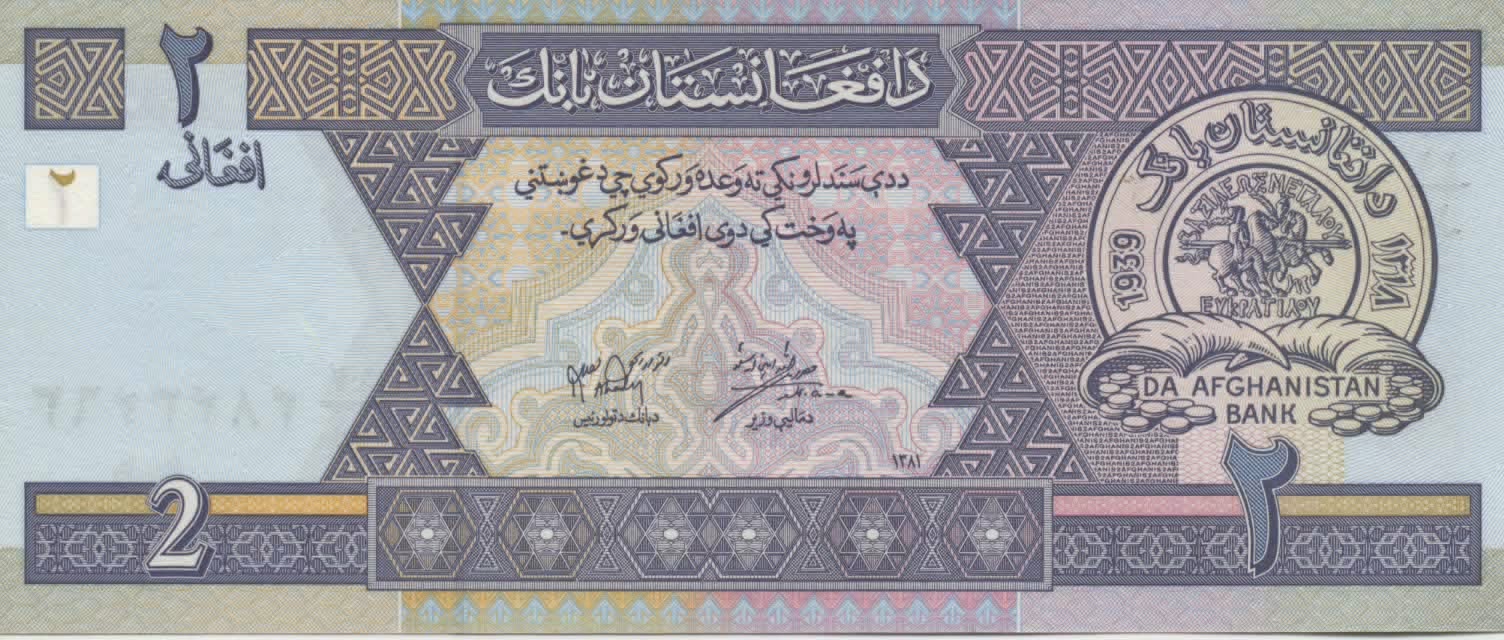
AFGHANISTAN FROM 1381


This is a 2 Afghani note from SH1381 (CE2002) with the victory arch near Kabul. Unfortunately it no longer looks like that and has suffered the same fate as many other areas of Afghanistan in the ongoing conflicts.


DIFFERENT RUPEE, DIFFERENT COUNTRY


This note from Nepal has a beautiful picture of a leopard on the reverse. The leopard is not an animal that i would associate with Nepal, I may be more likely to say Yeti or Yaks but leopards inhabit territory from Siberia to sub Saharan Africa and they are gorgeous if dangerous animals. Jim Corbett's " the man eating leopard of Rudraprayag" was his account of hunting a leopard who was reputed to have killed over 125 people. The area Jim Corbett operated in, at the beginning of the 20th century, was an Indian Provence on the Nepal border.

........ but back to the note!!!! this is a 2 Rupee note from 1981. It has King Birendra on the front. King Birendra ruled Nepal from 1972 until the Nepalese royal massacre in 2001. The massacre occurred when Prince Dipendra killed 9 members of the royal family and then committed suicide.

More Nepalese notes HERE

A NEATER NOTE FROM INDIA


I have a similar 5 Rupee note but this one is uncirculated (unc) and a lot cleaner. They have a similar reverse with the tractor ploughing but the front of this one has Mohandas K Gandhi, probably the most famous Indian of all time, blazoned across the note. Its quite a colourful wee note with a watermark of the same portrait of Gandhi and a metal strip, which you can see just to the left of Gandhi. The note is from 2010.

More Indian notes HERE

BELARUS FROM 2000


This is the 100 Rublei note from 2000 with the Bolshoi ballet and theatre building on the front and a scene from the opera Vibrannista on the reverse.

See more from Belarus HERE

ONE TO ADD TO THE CROATIA ISSUE


This is the 25 Dinara note from Croatia. It is part of the 1991 issue with the poet, Roger Joseph Boscovich , on the front and Zagreb cathederal on the reverse with the layout being reversed to portrait orientation.

Some of the others in this issue are HERE


Zegreb Cathederal

FROM ONE COMMUNIST TO ANOTHER


We move from Ho Chi Minh to another famous communist, Chairman Mao, who was the 1st chairman of the central committee of the communist party of China. Here he is represented on the 1 Yuan note from 1999. The reverse has "Three Pools Mirroring the Moon" which has temples on the west lake in Hangzhou. This is a bit strange to put them together on a note as Mao is noted to have said "all religion is poison" a more direct version of Marx's quote " religion is the opium of the people"

More Chinese Notes HERE  or click on china on the right of this post.

VIETNAM'S HO CHI MINH


Here is two more to add to the Vietnam collection. they are the 500 Dong and 200 Dong notes. the 500 Dong has Ho Chi Minh  on the front and ships on the reverse whereas the 200 also has Ho Chi Mihn but has a tractor on the reverse

More Vietnam Notes HERE

MORE BIRDS FROM ZAMBIA


These two notes from Zambia are the 100 Kwacha note from 2008 and the 2 Kwacha note from 1980. The K100 note has the Fish eagle on the front and Victoria falls and a buffalo head on the reverse. whereas the K2 note has the Fish Eagle and President Kaunda on the front and a school, teacher and student on the reverse.

More from Zambia HERE


Saturday, 7 February 2015

MORE MONGOLIA


This is a wee set I got the other day not realising that I had some of them already but I'm not that worried as they are a good set !!

they are:

100 Tugrik from 2008
50 Tugrik from 2013
20 Tugrik from 2013
10 Tugrik from 2009
5 Tugrik from 2008

all the above have Damdin Sukhbaatar, a founder of the Mongolian peoples Party on the front and and the Soyombo symbol on the reverse .

The final note is the 1 Tugrik from 2008 see a description HERE . it is no longer used and I believe this is the last date that was issued. .The Tugrik was split into Mongos but they are not used now either as they are almost valueless.

The word Tugrik comes from the mongolian word for "circle" ( as in coin ??) and is used also for "full moon" - Tugrik Sar

The Tugrik replaced the Mongolian Dollar in 1925 and had the same value as the Russian Rouble.


Saturday, 31 January 2015

PANAMA TEST NOTE


This is the 20 Balboa test note from 2014. Panama has been using US dollars so this might be a move to having their own currency.


TEST NOTES

Test money  are a part of the test apparatus that are often used with currency handling equipment, such as automatic teller machines.
While it is often desirable to use actual banknotes or coins in the process of testing currency handling equipment, the inherent value of the objects being used means that security procedures must be put in place during the testing period that they are used. If the testing includes destructive testing, where the currency is purposefully damaged or destroyed to see how the machinery will react, further concern will be raised about the subsequent loss in value of the objects. To remove these concerns, test money is often used in place of real currency.
Test money may share some or all of the characteristics of a given currency (size, paper type, paper thickness, colouring, printing characteristics, various denominations), but it also has some form of easily identifiable, non-removable, non-mutable characteristics that differentiate it from legal tender, scrip, or counterfeit currency.
For certain types of bulk cash handling equipment, the test money units may represent bundled or rolled currency.

SHILIN SOOMAALI


Here is an addition to the 5 shilin note HERE

This is a 50 shilin soomaali note from 1991. The Front has a man operating a loom. The reverse has  someone leading a donkey with children on it, the  watermark is sayyid  MohamadAabdullah hassan

MORE KYRGYZSTAN


Some new additions to  Kyrgyzstan

First of all is the 10 som note with KasymTynystanov (Kyrgyz: Касым Тыныстанов) (1901–1938) who was a prominent Kyrgyz scientist, politician and poet. He served as the first Minister of Education of the Kyrgyz Republic.  and  mountains on reverse. The watermark is the portrait of kasim

Then there is the 5 som note with ballerina BibisaraBeishenaliyeva (1926-1973)  on the front and the national opera theatre on the back.

the 1 som Description is  here

EXPANDED MALAWI COLLECTION


Some new notes to top up my Malawi collection.

100 kwacha note has JamesFredrick Sangala, who was the president and one of the founding members of the Nyasaland African Congress.  On the reverse is the college of medicine in Blantyre  

50 kwacha note has Philip II ruler of the Ngoni dynasty from 1896 – 1954 on the front   and a picture from the kasungu nature reserve on the back. 


20 kwacha – This one is a doubler so you can find a description here and more Malawi notes here